Home Services Spray Foam Insulation

Spray Foam Insulation

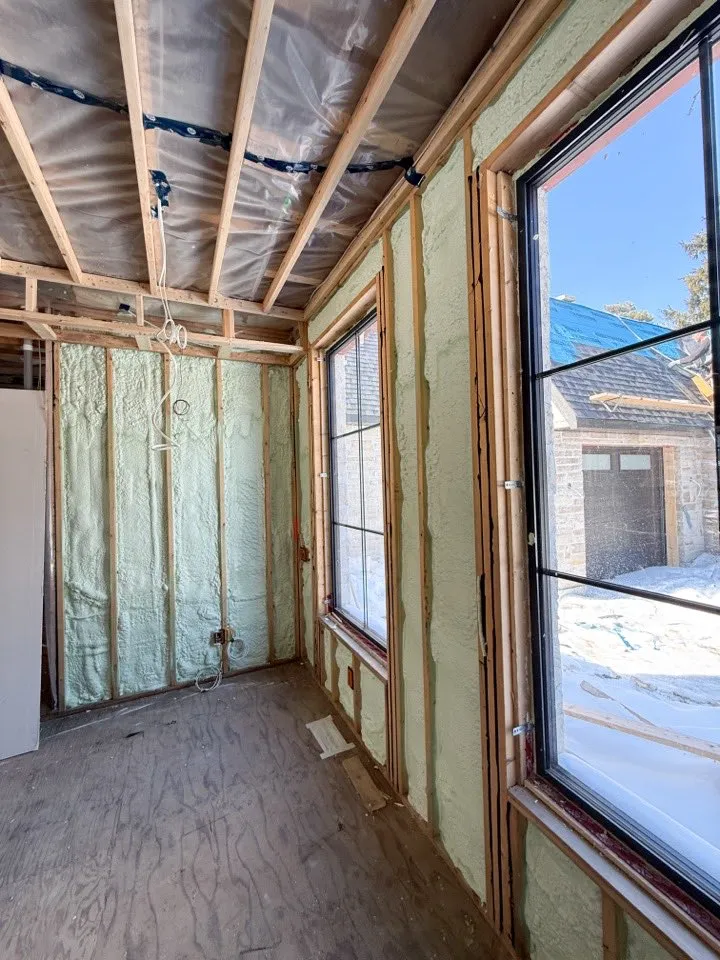
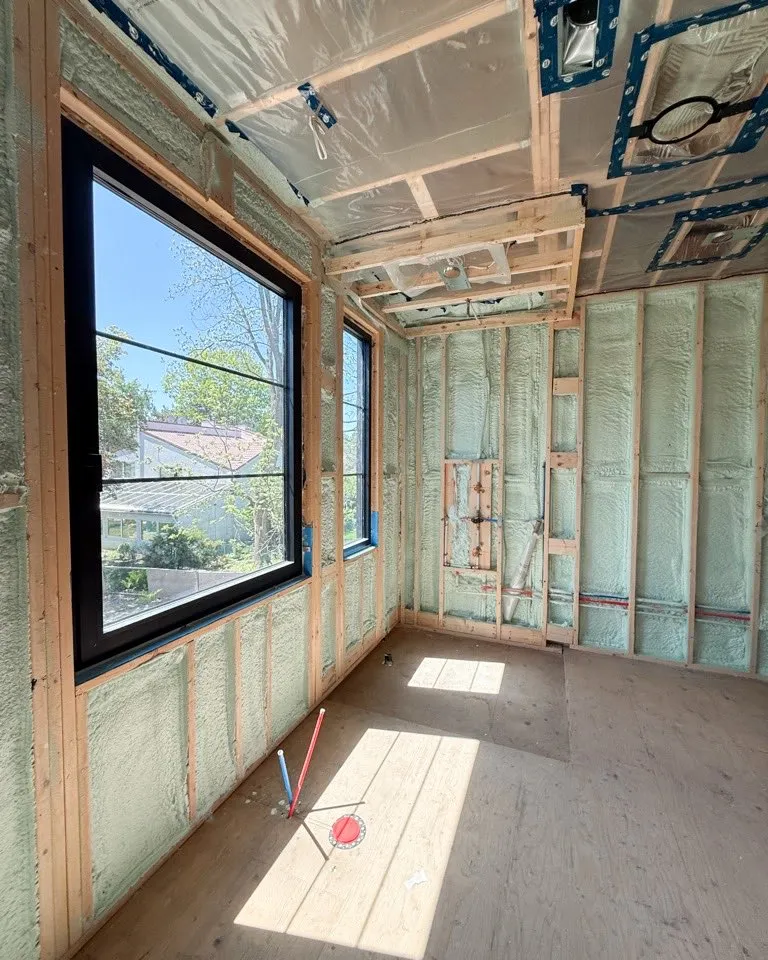
2 lb closed-cell spray foam insulation for new builds across Toronto and the GTA. Applied by CNG crews to walls, cathedral ceilings, rim joists, crawl spaces and below-grade assemblies — air-sealed and insulated in a single pass.

Overview

The gold standard in insulation

Spray polyurethane foam is mixed on site and sprayed straight onto the substrate, where it expands to fill the cavity and bonds to framing, sheathing and every penetration. It seals as it insulates, so one pass delivers the specified R-value and closes the gaps that let conditioned air leak out of the building.

CNG sprays 2 lb closed-cell foam across the Greater Toronto Area on custom homes, townhome developments and multi-unit residential, and we'll mark up your drawings to show where it belongs.

Closed-cell and open-cell

Closed-cell vs open-cell

Two densities of the same product. Closed-cell is what nearly every new-build spec calls for and what we recommend; open-cell is the lighter, cheaper product with real limits on where it can go.

2 lb closed-cell · Higher R-value · Vapour barrier

Closed-cell spray foam

Dense, rigid 2 lb foam with fully sealed cells. It delivers the highest R-value per inch of any common insulation, sheds moisture, acts as its own vapour barrier at depth, and adds racking strength to the wall it's sprayed into. It's the product specified on most new-build assemblies.

  • Exterior walls where cavity depth is limited
  • Rim joists and headers
  • Basement and foundation walls
  • Crawl spaces and cold floors
  • Cathedral and flat roof assemblies
½ lb open-cell · Half the R-value · Interior only

Open-cell spray foam

A light, half-pound foam that expands to fill the cavity but cures soft and spongy. It insulates at roughly half the R-value per inch of closed-cell, so it needs twice the depth to hit the same target; it absorbs water instead of shedding it, offers no vapour control, and adds nothing to the structure. That rules it out below grade and in exterior assemblies without a separate vapour barrier, and the poly and taping it then needs tend to erase whatever it saved on price.

  • Interior partitions, where R-value doesn't matter and the job is sound
  • Floors between storeys, for sound — where a mineral wool batt often does the same job for less
  • Attic roof decks only where depth is unlimited and a vapour barrier is added
Our spray foam work
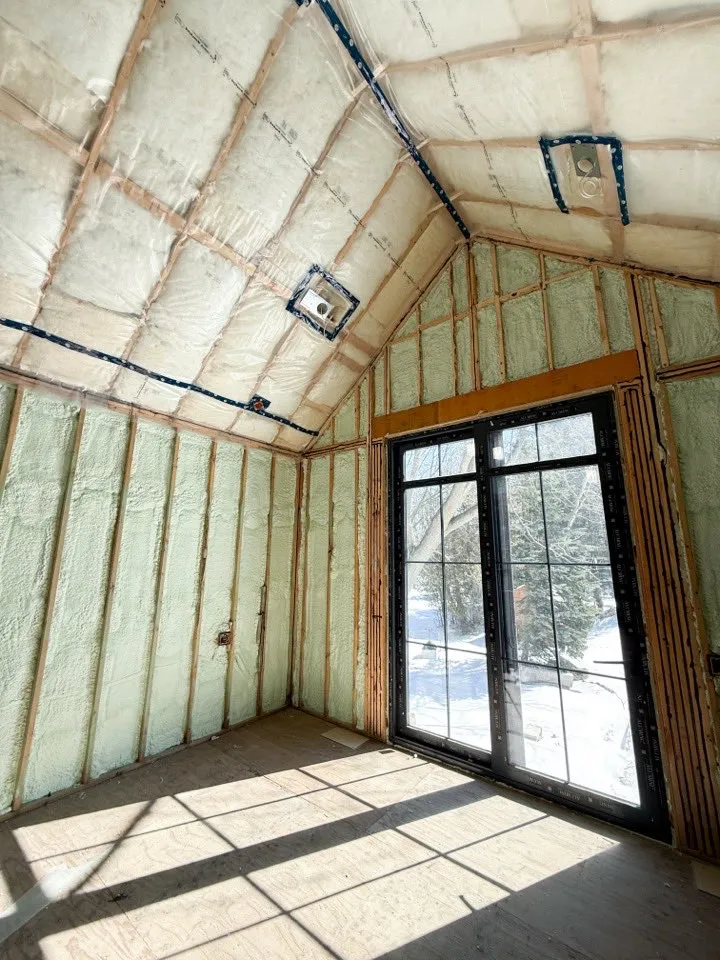
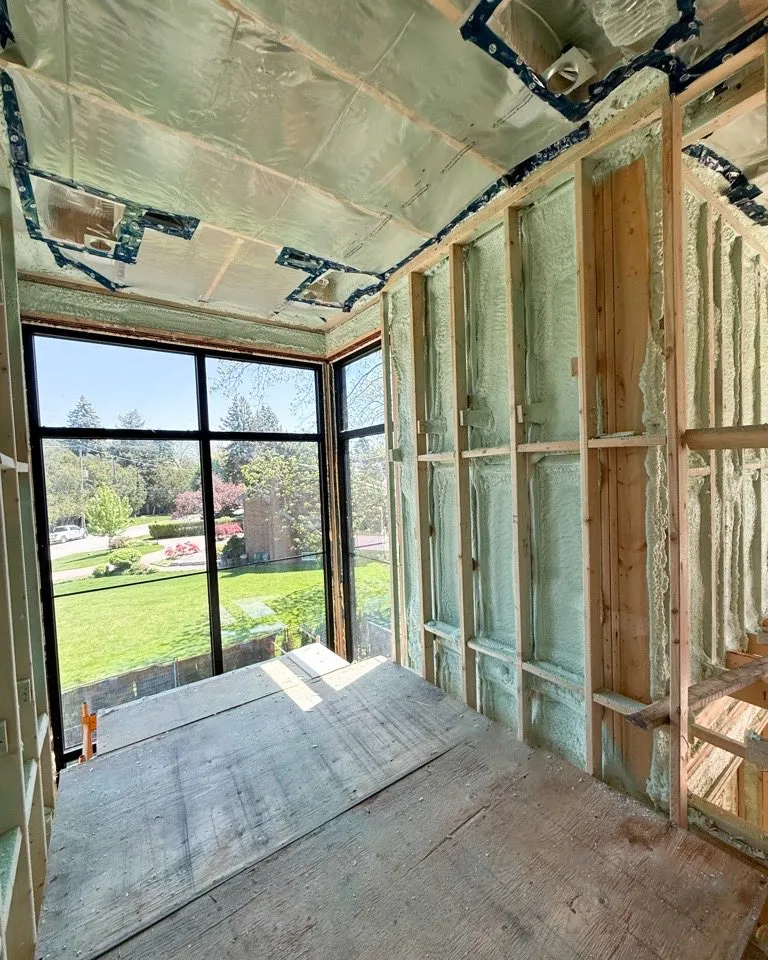
Spray foam insulation, Balcarra Ave, Scarborough
Balcarra Ave, Scarborough
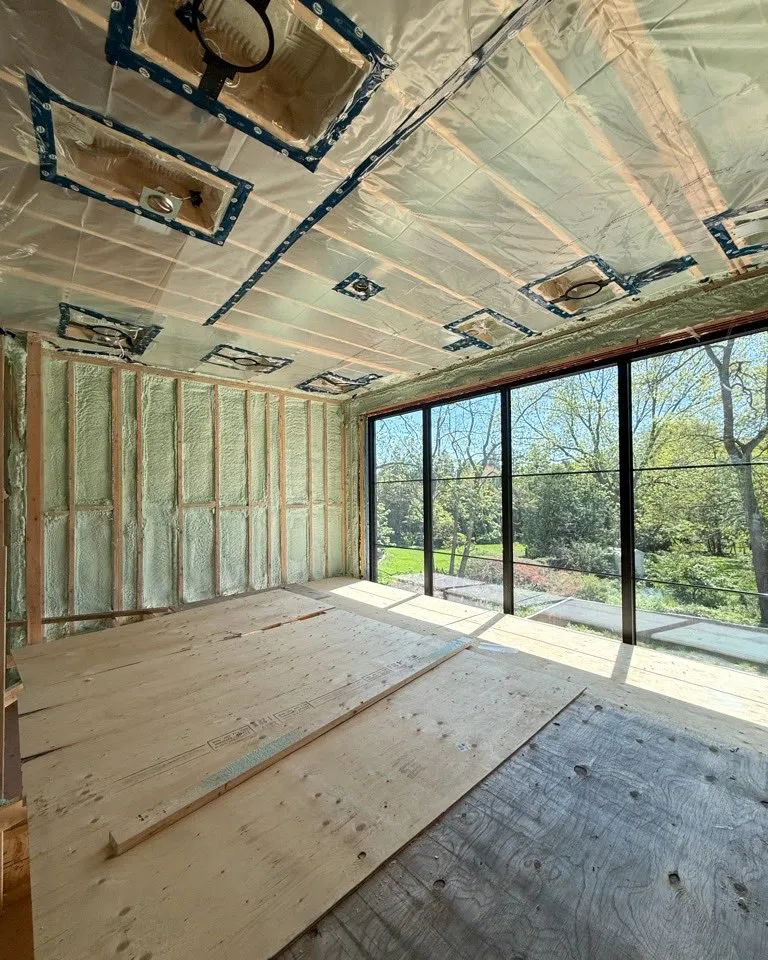
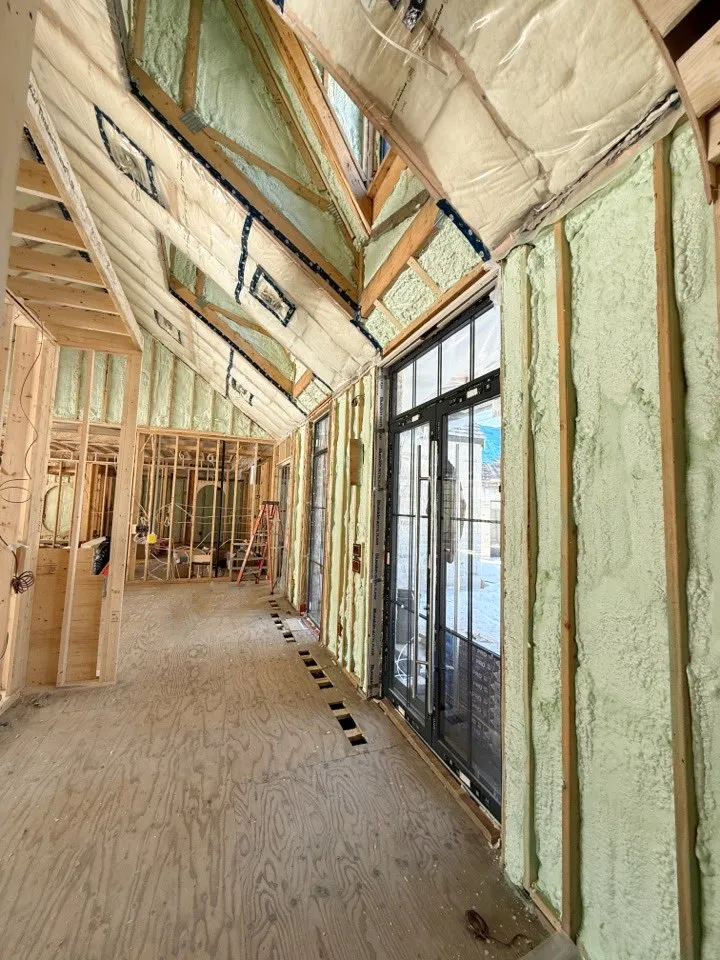
Spray foam insulation, Lorraine Gdns, Etobicoke
Lorraine Gdns, Etobicoke
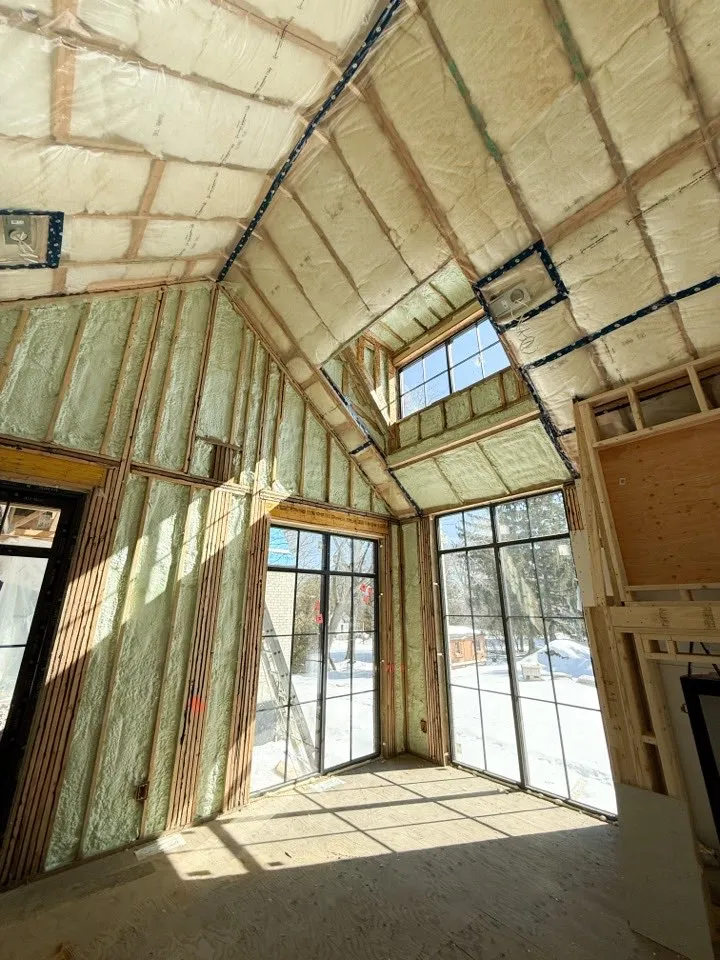
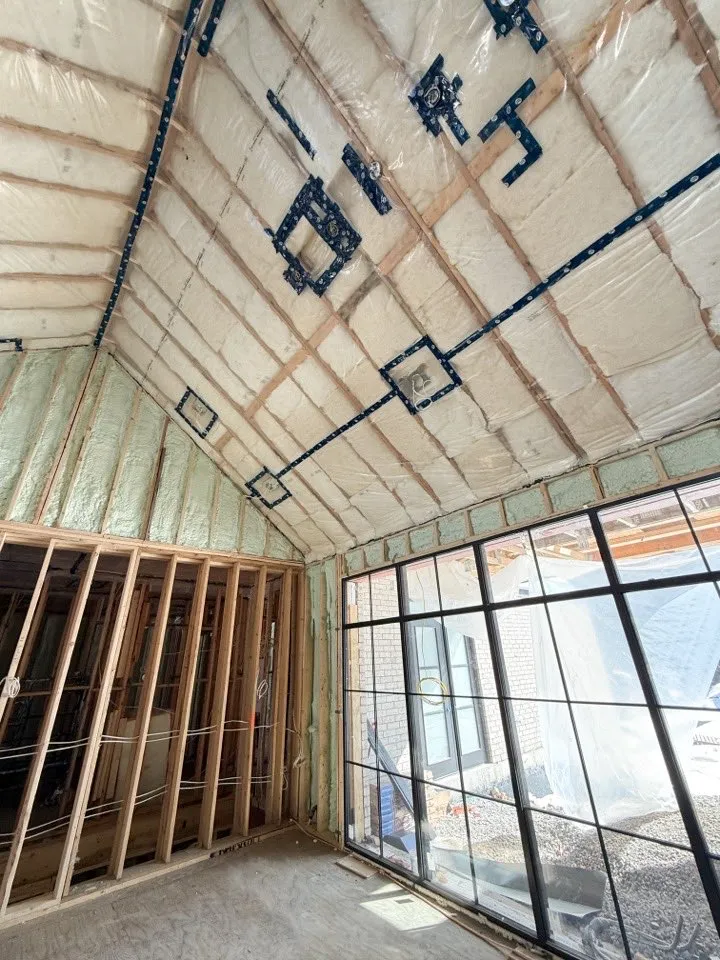
Spray foam insulation, Balcarra Ave, Scarborough
Balcarra Ave, Scarborough
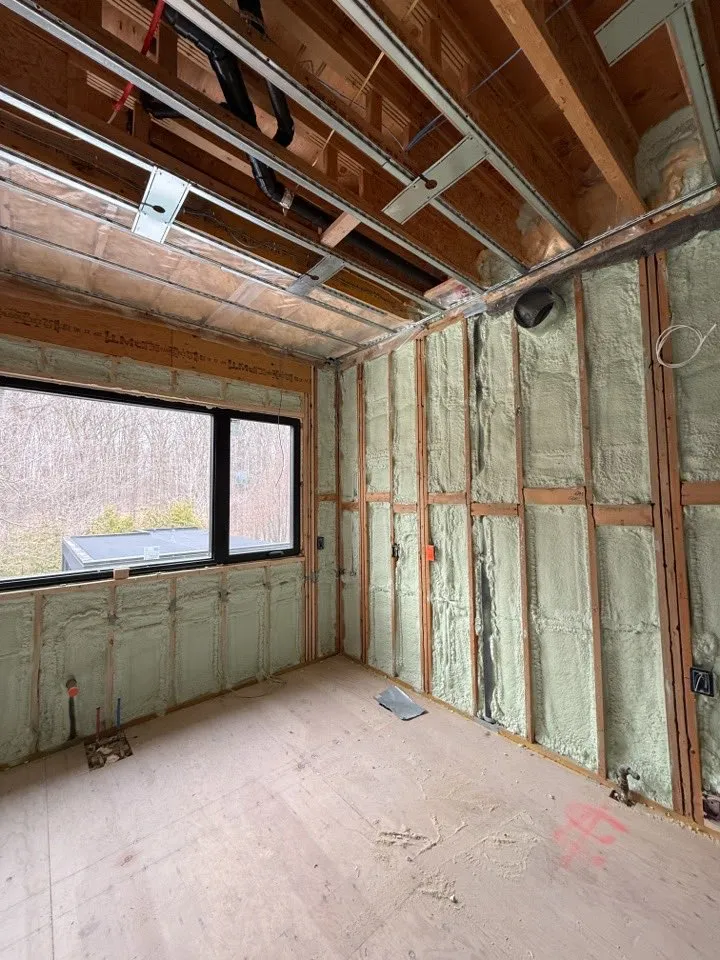
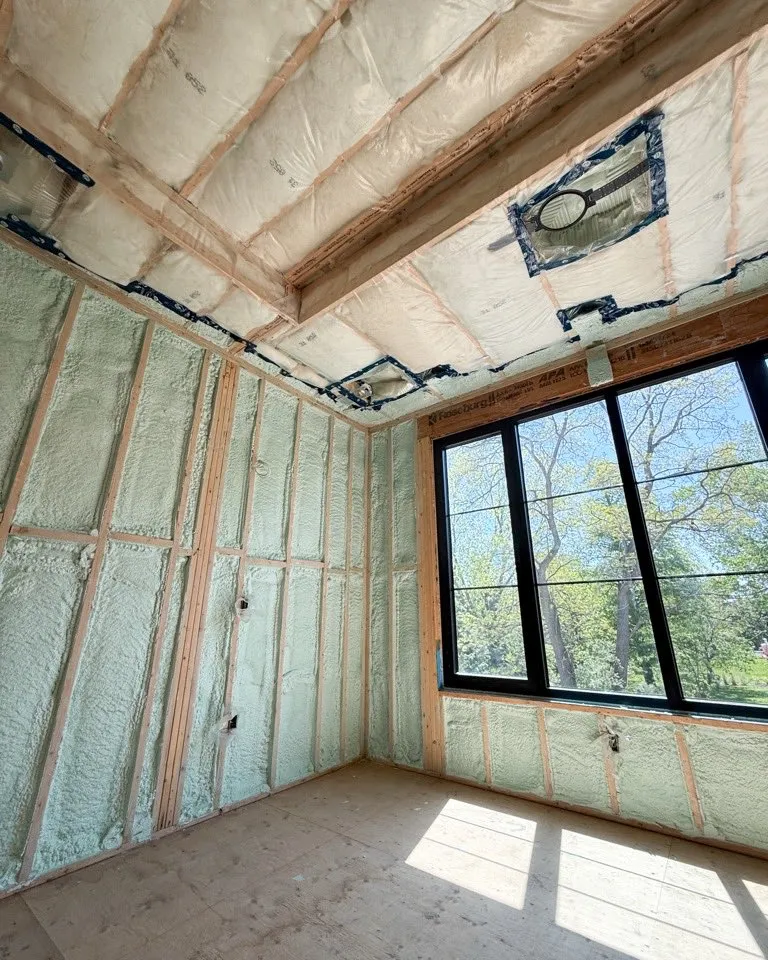
Spray foam insulation, Grandvista Cres, Vaughan
Grandvista Cres, Vaughan
Spray foam insulation, Lorraine Gdns, Etobicoke
Lorraine Gdns, Etobicoke
Spray foam insulation, Balcarra Ave, Scarborough
Balcarra Ave, Scarborough
Spray foam insulation, Balcarra Ave, Scarborough
Balcarra Ave, Scarborough
Spray foam insulation, Lorraine Gdns, Etobicoke
Lorraine Gdns, Etobicoke
Spray foam insulation, Balcarra Ave, Scarborough
Balcarra Ave, Scarborough
Spray foam insulation, Lorraine Gdns, Etobicoke
Lorraine Gdns, Etobicoke
By the numbers

2 lb closed-cell

R-6per inch of 2 lb closed-cell, as a working rule
R-12the typical specification for ductwork
R-20continuous insulation on concrete exterior walls
R-22 / R-24wood-framed exterior walls
R-31flat ceilings
Applications

Where we spray it

Exterior walls
Exterior joist pockets
Exterior flat ceilings and roofs
Underside of roof
Exterior cathedral and vaulted ceilings
Exterior foundation walls
Around exterior ducts and pipe runs
Crawl spaces and floors over unheated space
Garage ceilings under living space
Why builders choose spray foam

What spray foam does for the build

  • The highest R-value per inch of any common insulation. Closed-cell reaches Ontario's targets in framing depths batt insulation can't — 2×6 walls, rim joists, cathedral ceilings — without furring the assembly out.
  • Insulation and air barrier in one lift. Foam bonds to the framing and sheathing and fills every irregular cavity and penetration, cutting the air leakage that batt insulation and poly leave behind. That's what shows up on the blower-door test.
  • Structure and durability. Closed-cell adds racking strength to the wall, doesn't sag, settle or slump, and doesn't absorb water — a wetting during construction doesn't write it off the way it does a batt.
  • Cleaner detailing where the drawings get complicated. Knee walls, bulkheads, cantilevers, ducts in exterior walls, service penetrations — foam does what a precisely cut batt only promises.
  • Documented, inspectable work. Medium-density foam may only be applied by licensed installers under CAN/ULC S705.2, with thickness checks and a Daily Work Record for every day on site. It still has to be sprayed right — that's the part we're accountable for.
  • A house that costs less to run. An air-sealed, closed-cell envelope cuts the heating and cooling load for as long as the owner has the house — the one line item on the build that keeps paying after handover.
Common questions

Spray foam FAQ

How long does spray foam take on a custom home?

Most custom homes are two to three days at the insulation stage, depending on square footage and how much closed-cell is in the spec. We'll give you a firm schedule with the quote so the next trade can be booked.

Is spray foam safe once it's cured?

Yes. Cured spray foam is inert. During application and for a short curing window afterward the site needs to be clear of other trades, which we coordinate with your super. Our installers are Caliber certified and follow the manufacturer's application procedures.

Closed-cell or open-cell — which should I use?

Closed-cell, on almost every new-build assembly: the most R-value in the least depth, its own vapour barrier, and it can go below grade and in exterior walls. Open-cell only makes sense for interior sound control where R-value is irrelevant, and even there a mineral wool batt is often the better value. Send us the drawings and we'll mark up the assemblies.

Does spray foam replace the vapour barrier?

Closed-cell at sufficient thickness acts as a vapour barrier and is accepted as such in most Ontario Building Code applications. Open-cell does not, and still needs a separate vapour barrier on the warm side. We'll confirm what your inspector will want to see.

What does spray foam cost compared to batt?

More per square foot installed, and it earns that back in R-value per inch, air sealing and fewer trades. On a typical custom home the spray foam line is a small percentage of the build. We'll price it alongside batt so you can see the difference on your actual drawings.

Can spray foam be used in a renovation?

It can, where the cavity is open. We focus on new construction and major builds rather than small renovation and home-improvement jobs.

Where we work

Proudly serving the GTA
& surrounding areas