Our sound-control work
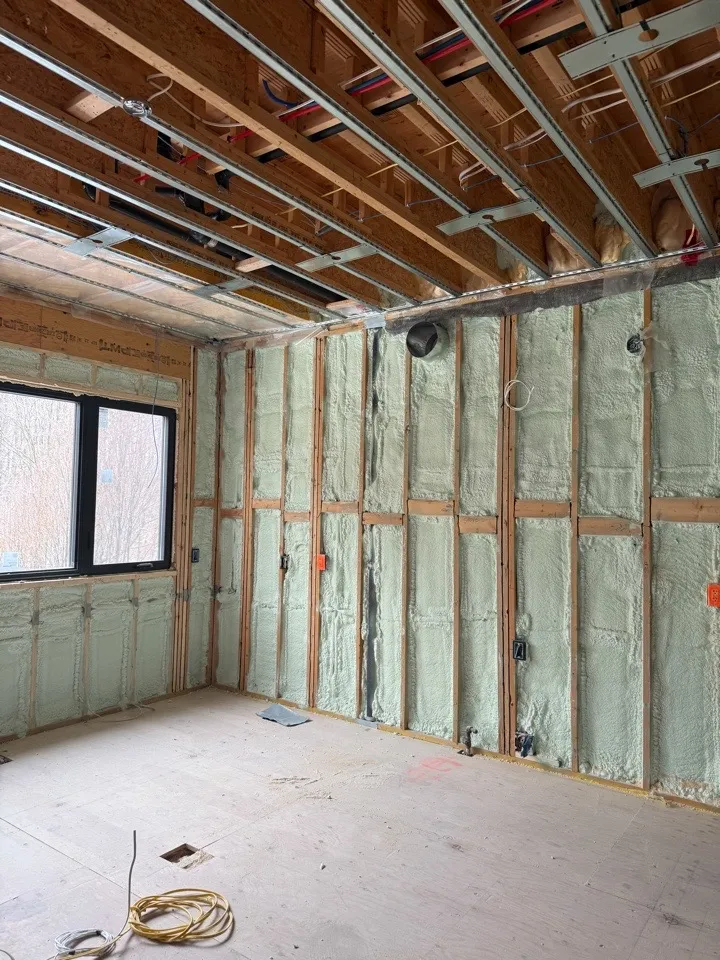
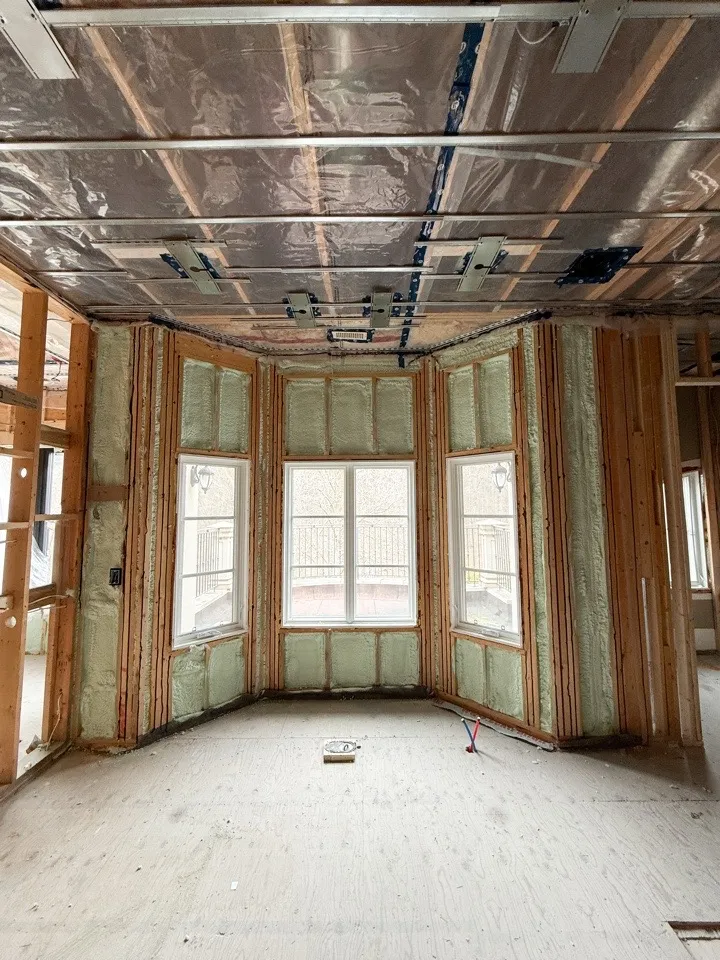
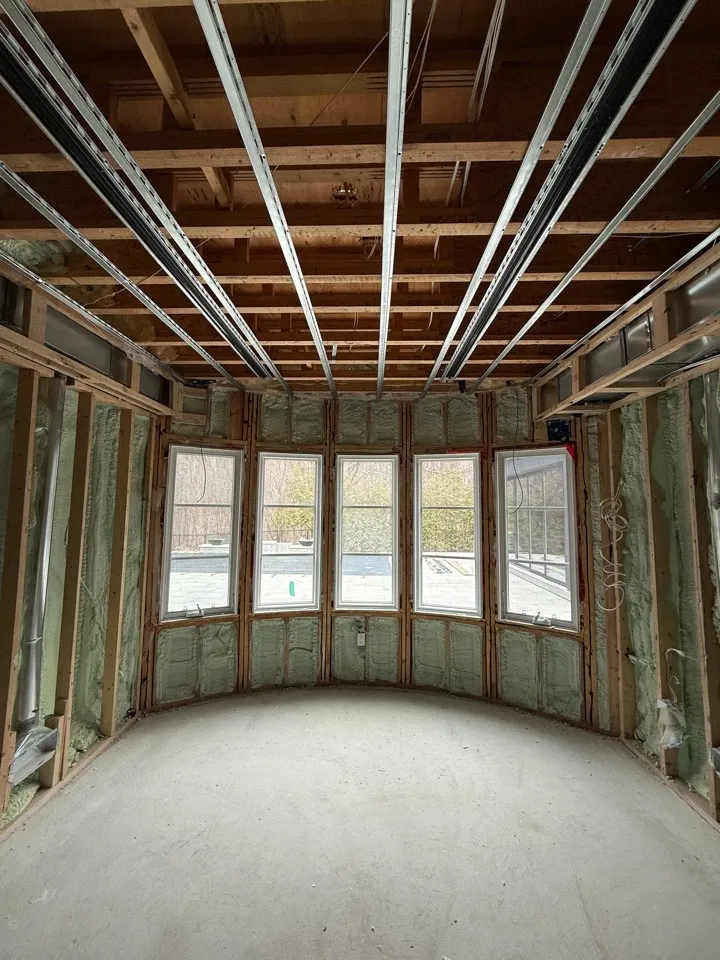
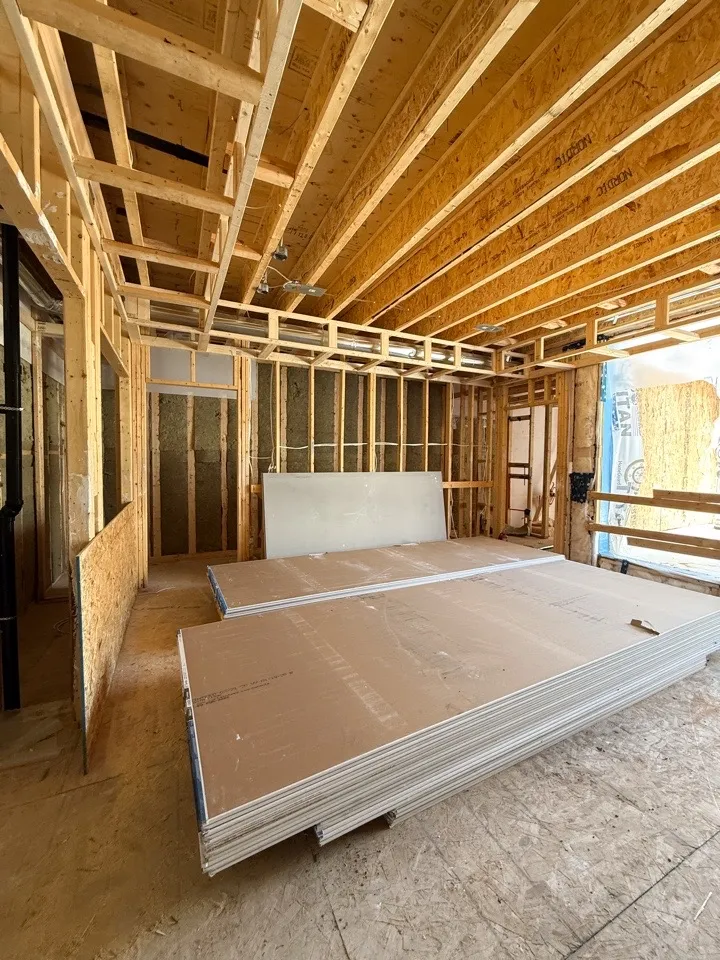
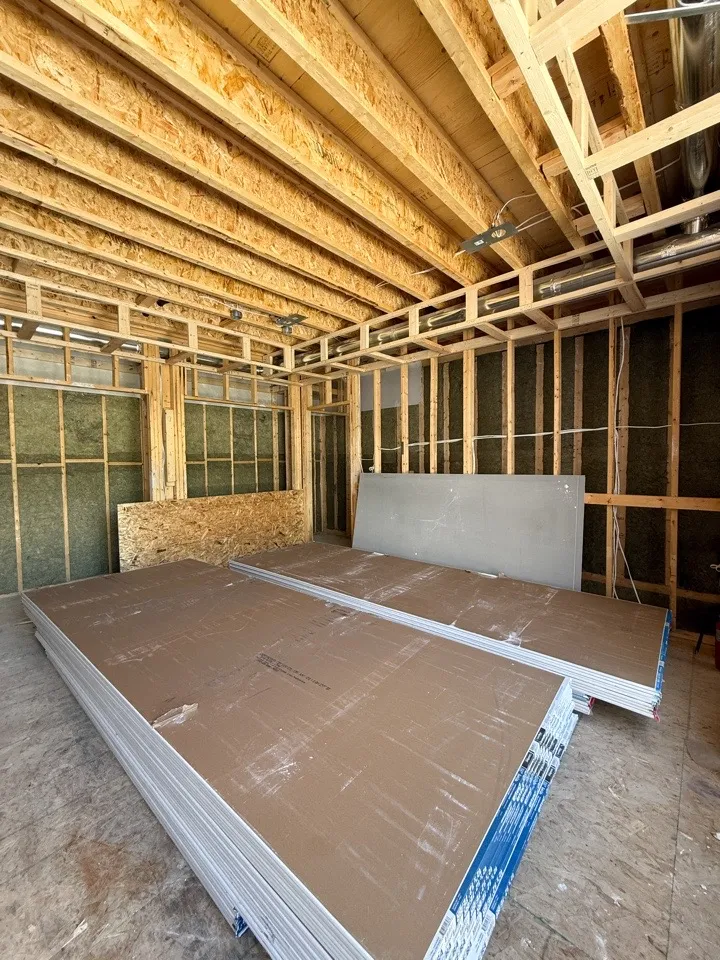
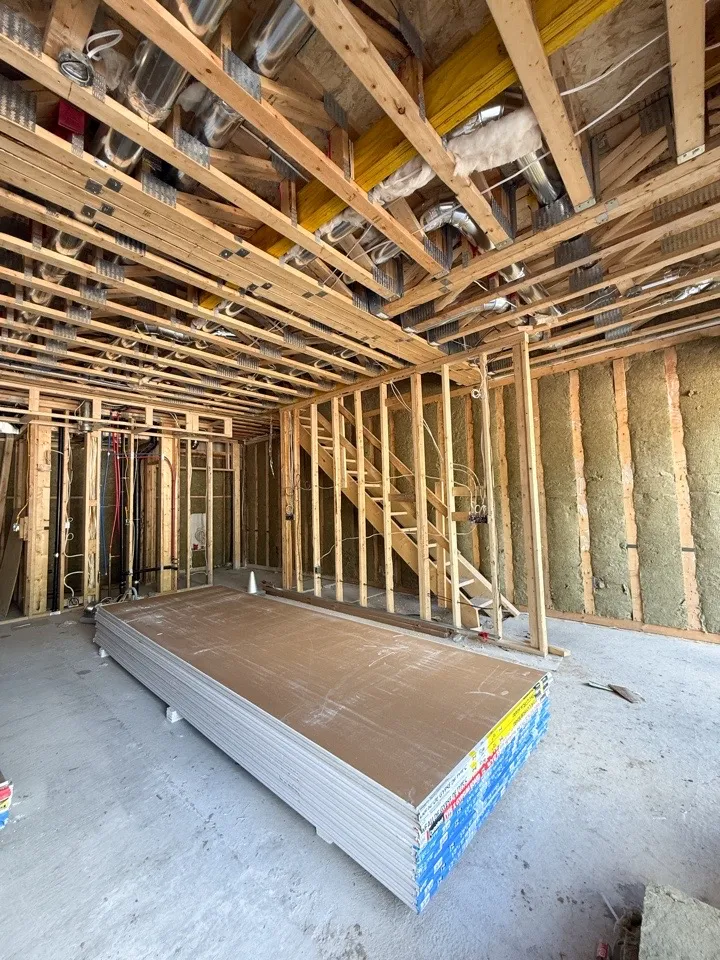
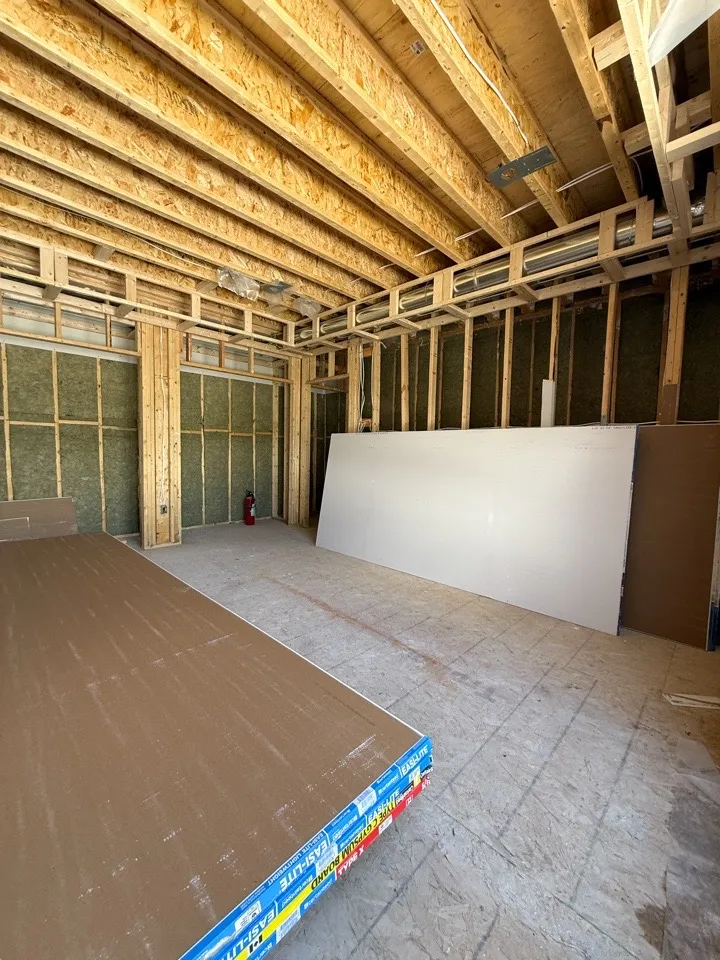
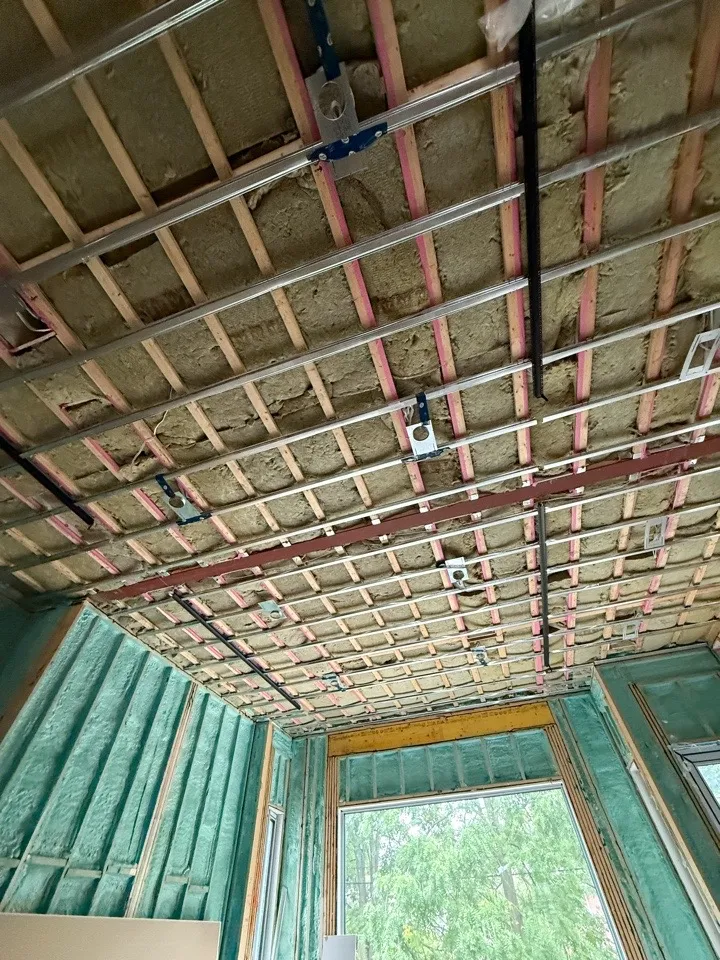
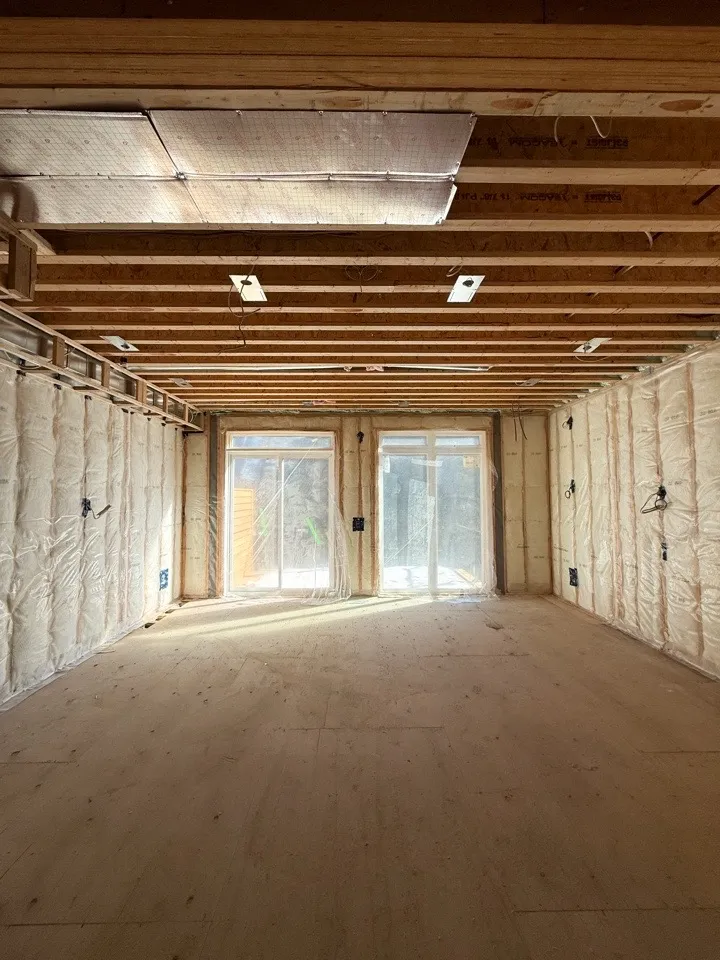
Sound moves through a wall three ways: through the air in the cavity, through the studs and joists that connect one side to the other, and through every gap around outlets, pipes and the top plate. An acoustic assembly deals with all three. Mineral wool absorbs the sound in the cavity, resilient channel or isolation clips break the path through the framing, Sonopan panels under the board damp what gets through, and a second layer of drywall with acoustic sealant adds the mass and the seal.
That is why insulation alone does not soundproof a room, and why CNG builds the assembly rather than just filling the cavity. We install the wool, hang the channel, fit the Sonopan, board both layers and seal the perimeter, so the STC on the drawings is the STC you get.
We install acoustic assemblies in party walls and floors on townhome and multi-residential developments, and around bedrooms, bathrooms, theatres, offices and mechanical rooms in custom homes across the Greater Toronto Area.
The three parts of a quiet wall. Mineral wool handles the sound inside the cavity, resilient channel and clips stop it travelling through the framing, and Sonopan panels under the drywall damp what is left. Most rated assemblies need at least two of the three.
Dense batt spun from rock, friction-fit between studs and joists. We use Rockwool Safe’n’Sound. Mineral wool absorbs more sound than fibreglass at the same thickness, holds its shape without sagging, is non-combustible and is the product in nearly every fire-rated and sound-rated assembly listing. It adds roughly 4 to 6 STC points to a bare partition.
Hat-shaped steel channel fastened to one side of the framing, with the drywall screwed to the channel and never to the stud. It breaks the direct path for vibration and is what lifts a wool-filled wall from the high 30s into the STC 50 range the code asks for between units. Isolation clips do the same job with a further gain where the spec is tighter.
A three-quarter-inch panel of compressed recycled wood fibre, made in Quebec, screwed to the studs or the resilient channel with the drywall over it. It adds a damping layer that takes the assembly further than wool and channel alone, and it is what we use on theatre room walls. Listed assemblies reach STC 50 with insulation, Sonopan and Type X board, and STC 58 with resilient channel and two layers of board.
No. Batt insulation in the cavity adds a few STC points by absorbing sound, but most noise travels through the framing and through gaps. To make a real difference the wall also needs decoupling, with resilient channel or clips, mass from a second layer of drywall, and a sealed perimeter. We build all of it.
Mineral wool. It is denser, absorbs more sound per inch, does not sag out of a wall cavity, and is what the fire and sound listings are written around. Fibreglass batt helps, but if the wall matters enough to insulate for sound, it is worth the mineral wool.
The Ontario Building Code requires STC 50 between dwelling units and STC 55 next to elevator shafts and refuse chutes. A typical route is mineral wool, resilient channel on one side and 5/8 inch Type X drywall, with a second layer where the assembly needs the margin.
Screws that reach through the channel into the stud, which reconnects the two sides and undoes the decoupling. Channel installed upside down, or with the drywall edge bearing on the framing. Our crews hang the channel and the board, so those mistakes are ours to prevent and we do.
Yes. Mineral wool between the joists, resilient channel or clips under the ceiling board and a second layer of drywall deal with airborne sound. Footfall noise also needs mass or an isolation layer in the floor above, which we will flag on the drawings.
Less than most people expect. Mineral wool costs more than fibreglass per batt, and channel and a second layer of board add material and labour on the walls that need it. On a custom home it is usually a handful of rooms. We price it wall by wall so you can decide.